Elisabeth Jerichau-Baumann 1818-1881
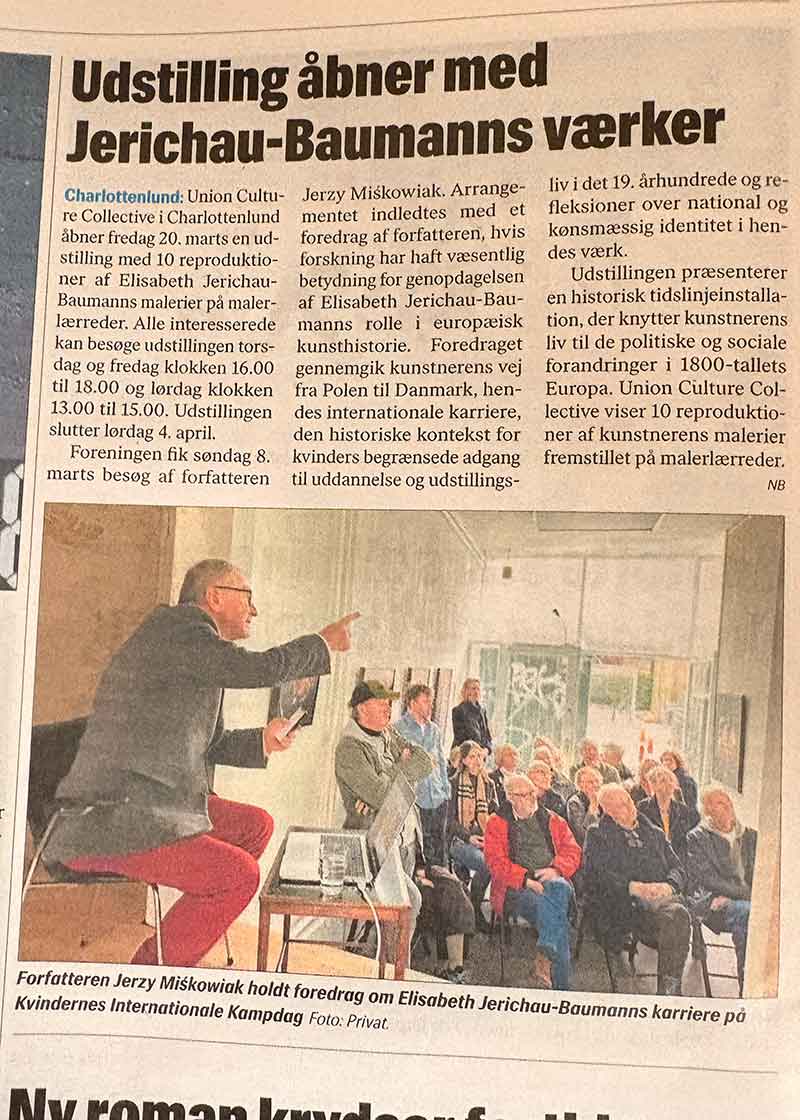
Exhibition Opening – March 8, 2026. International Women’s Day
Lecture by Jerzy Miśkowiak (art historian and author of a monograph on Jerichau)
Refreshments and wine (collaboration with the Polish Embassy in Copenhagen)
Artist talk by Jerzy Miśkowiak.
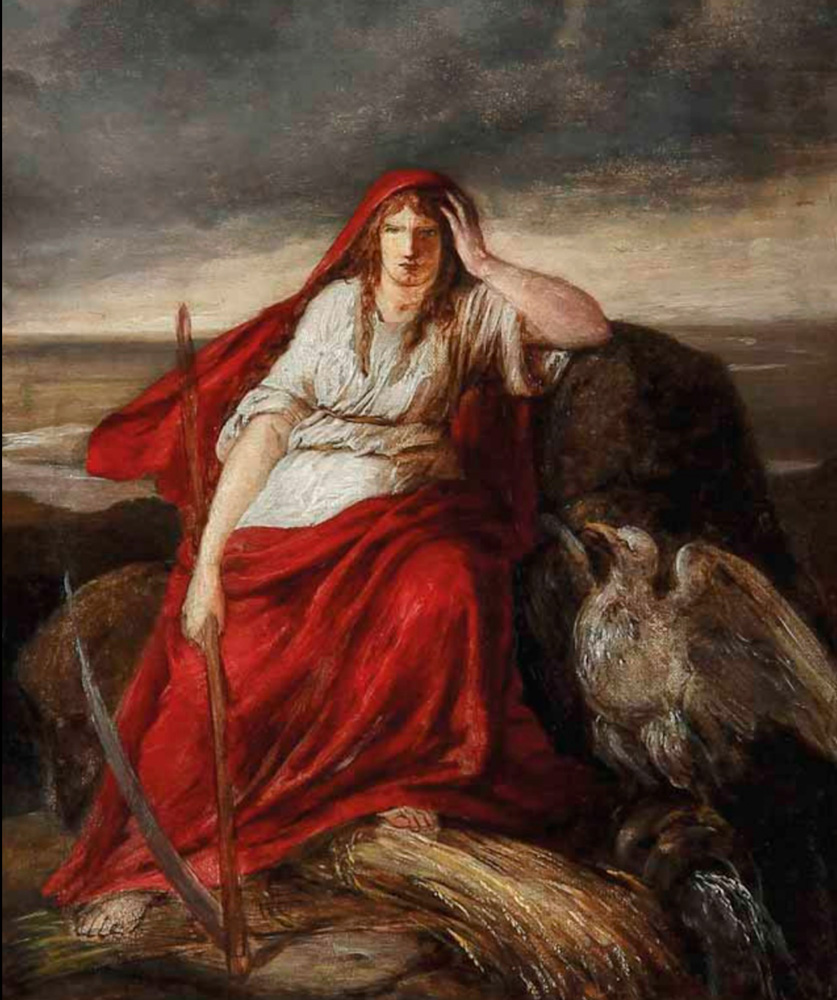
• Mother Denmark – the woman as a national allegory (personifies a nation, its values, landscape, and people)
• Mermaid – the female body in a mythological interpretation.
• Household Prayer – women’s spirituality and everyday life (bought by Napoleon III).
• A girl prays for her mother’s health – intimacy, care, prayer.
• Foundling Children / Polish refugees – children and migration in connection with the November Uprising.
• Portraits of women from the East (e.g., Zainab Hanim) – a female artist’s view of femininity in other cultures.
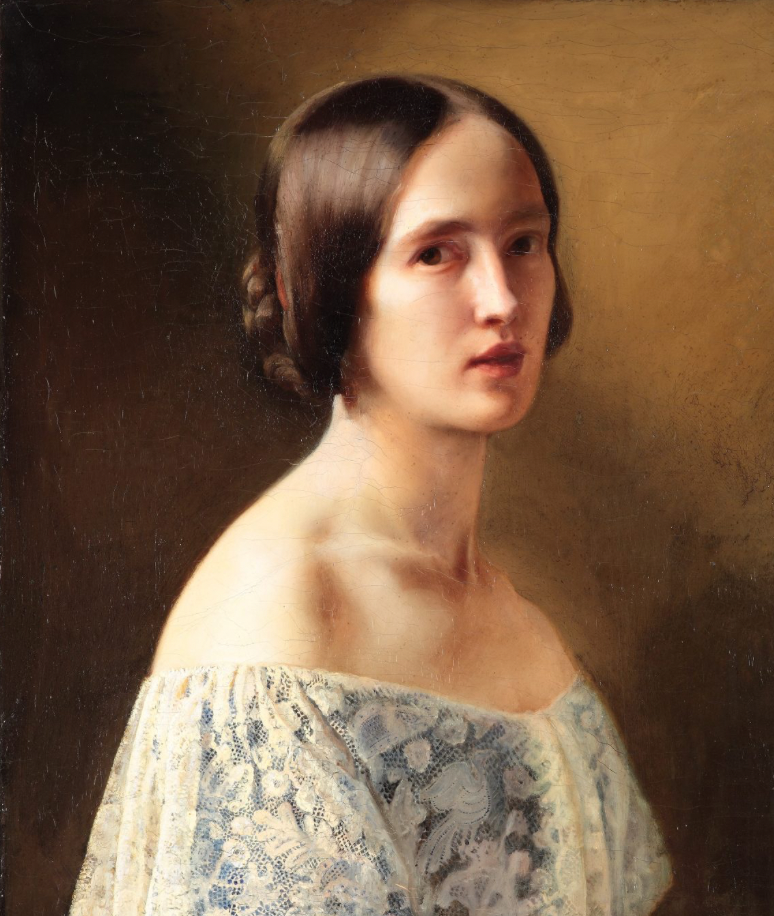
• Self-portrait or portrait with children – Elisabeth as artist and mother.
Works by Elisabeth Jerichau-Baumann have been selected for the exhibition, which particularly illustrate the themes of femininity, motherhood, national identity, and the breaking of social conventions. Each work is accompanied by a historical commentary and integrated into the historical timeline.
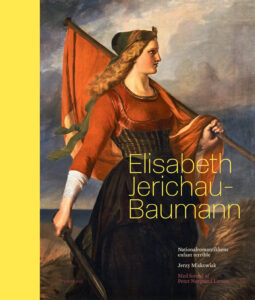
Jerzy Miśkowiak’s book brings Elisabeth’s remarkable story to life. During the artist event, he will share vivid tales of her artistic journey, her family, her critics, and her determination to create art on her own terms in a Europe where women rarely had a voice.
It is the portrait of a woman who refused to be limited – neither by borders nor by societal expectations.
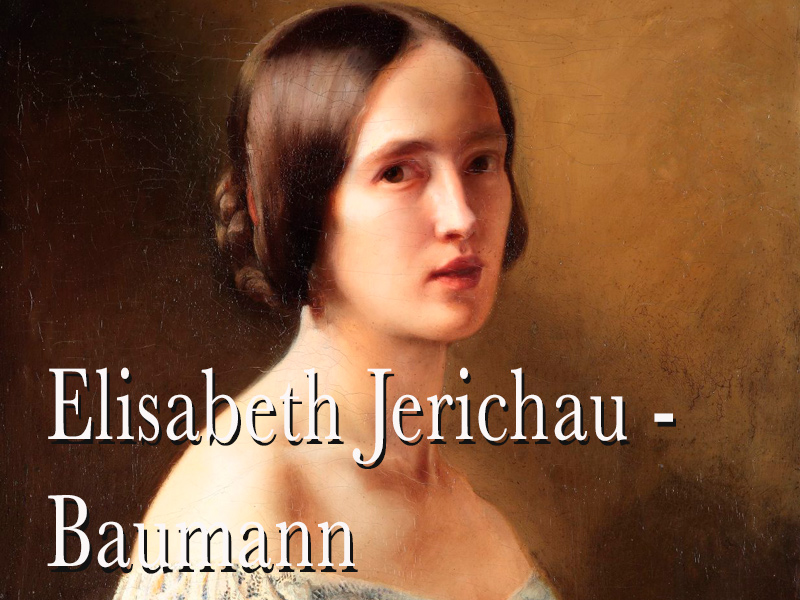
Elisabeth Jerichau-Baumann
A daughter of Poland, she was born in November 1818 and found her way to art early on – despite the many raised eyebrows that female brushes aroused in the salons of Europe.
In Düsseldorf, among the so-called “Düsseldorfers”, she received her education, and with stubbornness and boldness Elisabeth entered a world where men drew the lines – and rarely left room for anything else.
Fate led Elisabeth to Denmark, where she was married to the sculptor Jens Adolf Jerichau, a deeply feeling soul, and together they had nine children, including her beloved Harald, who also found his voice in painting.
In Denmark, she was met with not only cold winters but also a cool reception from the artistic elite.
Elisabeth’s cosmopolitan expression and her will to follow her own path often aroused distrust, especially among the gentlemen (e.g. N L Hoyen) who guarded taste and style like priests over a sanctuary.
But although the resistance was fierce, she still found a place at court, where she was warmly received, and where her brushes found new faces to immortalize.
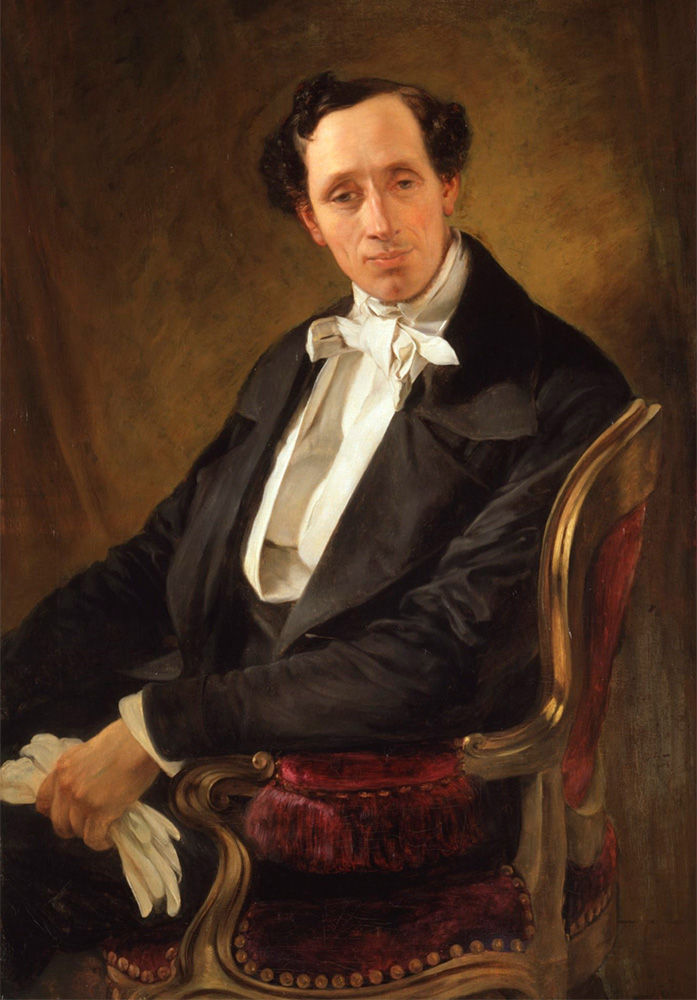
A special acquaintance grew in Elisabeth’s connection with H.C. Andersen – a man as delicate in soul as he was sharp in pen. Their conversations and his letters testify to both admiration and struggle – he understood, perhaps better than most, what it cost to be different.
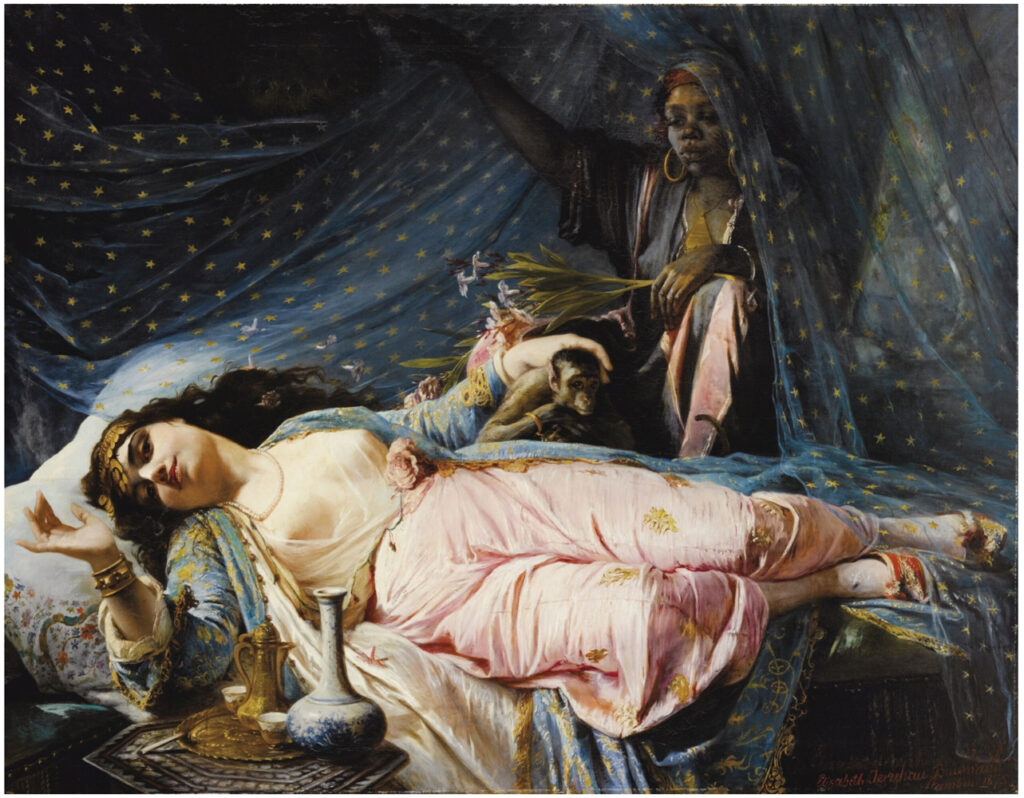
But motherhood did not bind Elisabeth to the four walls of the home; no, her life became a journey, rich in meetings and images – from the colorful bazaars of the East to the cold chambers of Europe, where Elisabeth painted princes and princesses, including the graceful Princess Nazli Zainab Hanim in her beautiful garden on the banks of the Nile.
Elisabeth’s paintings “Mother Denmark” and “Mother Poland” were not mere portraits – they became declarations. She carried her homeland in her heart, and her choice of motifs spoke of identity, belonging, and a woman’s perspective on the form and essence of a nation.